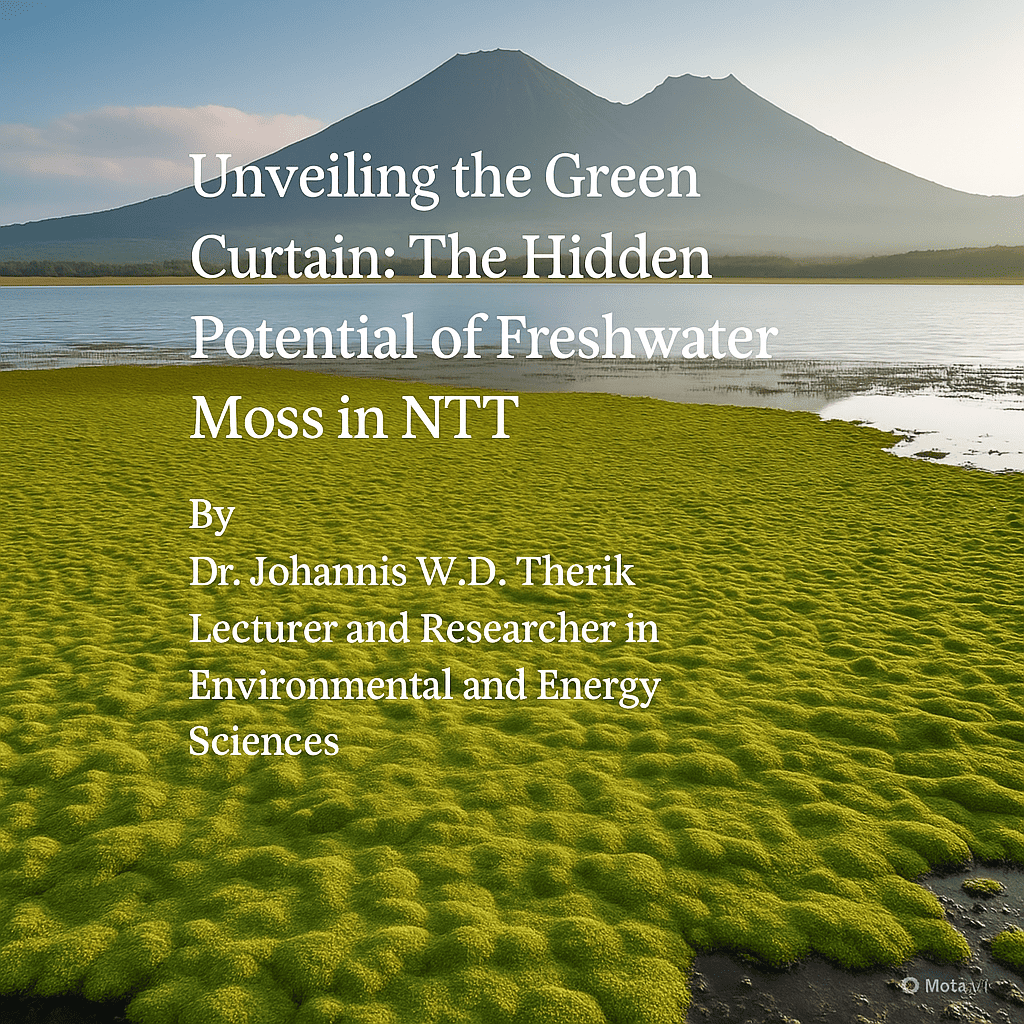
East Nusa Tenggara (NTT) is widely recognized for its savannas, mountains, and rich cultural heritage. Yet behind its predominantly dry landscapes lies an overlooked natural treasure: freshwater moss. Often disregarded due to its small size, this humble plant carries multidimensional potential that can support environmental sustainability while enhancing community livelihoods.
Water Quality Bioindicator: Guardian of Aquatic Ecosystems
From an environmental perspective, freshwater moss serves as a highly effective bioindicator. Its sensitivity to changes in water quality makes it a natural tool for monitoring the health of rivers and lakes across NTT. The presence of certain moss species can indicate pollution levels, enabling early detection of environmental issues before they escalate and impact aquatic life and humans. Initial studies at Taplel Waterfall in Kupang Regency have already shown notable moss diversity, although its application as a bioindicator remains underutilized.
Renewable Energy Source: The Future of Bioenergy in NTT
In the energy sector, freshwater moss holds potential as a sustainable source of bioenergy. To date, bioenergy research in NTT has primarily focused on organic waste, biomass, and geothermal resources. However, moss biomass can also be processed into biofuels. Further exploration of this potential could help NTT contribute to Indonesia’s national renewable energy mix targets while developing a locally sourced, environmentally friendly energy alternative.
Innovation and Moss-Based Economic Opportunities
Beyond environmental and energy benefits, freshwater moss presents promising economic prospects. In aquaculture, moss can serve as a natural spawning medium for ornamental fish, opening new business opportunities for local communities. Unique moss varieties also hold high value in aquascaping—the art of designing underwater landscapes in aquariums. In agriculture, moss can be processed into eco-friendly organic fertilizers, enhancing soil fertility and crop productivity.
Challenges and Strategic Steps Forward
Naturally, developing this potential faces challenges, including limited research, low public awareness, and unclear regulations. To address these, synergy among academics, policymakers, and local communities is essential.
Key steps include:
- Expedition and Inventory: Conduct comprehensive studies to identify and document freshwater moss diversity across NTT.
- Collaborative Research: Partner with universities and research institutions to examine bioactive compounds, bioenergy potential, and bioindicator effectiveness.
- Education and Training: Provide outreach and training for communities on the benefits and sustainable cultivation of moss.
- Pro-Environmental Policies: Develop supportive regulations for sustainable utilization, especially in conservation areas such as the Mount Mutis Nature Reserve.
By taking these steps, the hidden green curtain of freshwater moss in NTT can be unveiled—delivering tangible benefits for local communities while safeguarding the environment. It is a call for all stakeholders to take a closer look at this overlooked natural wealth.